
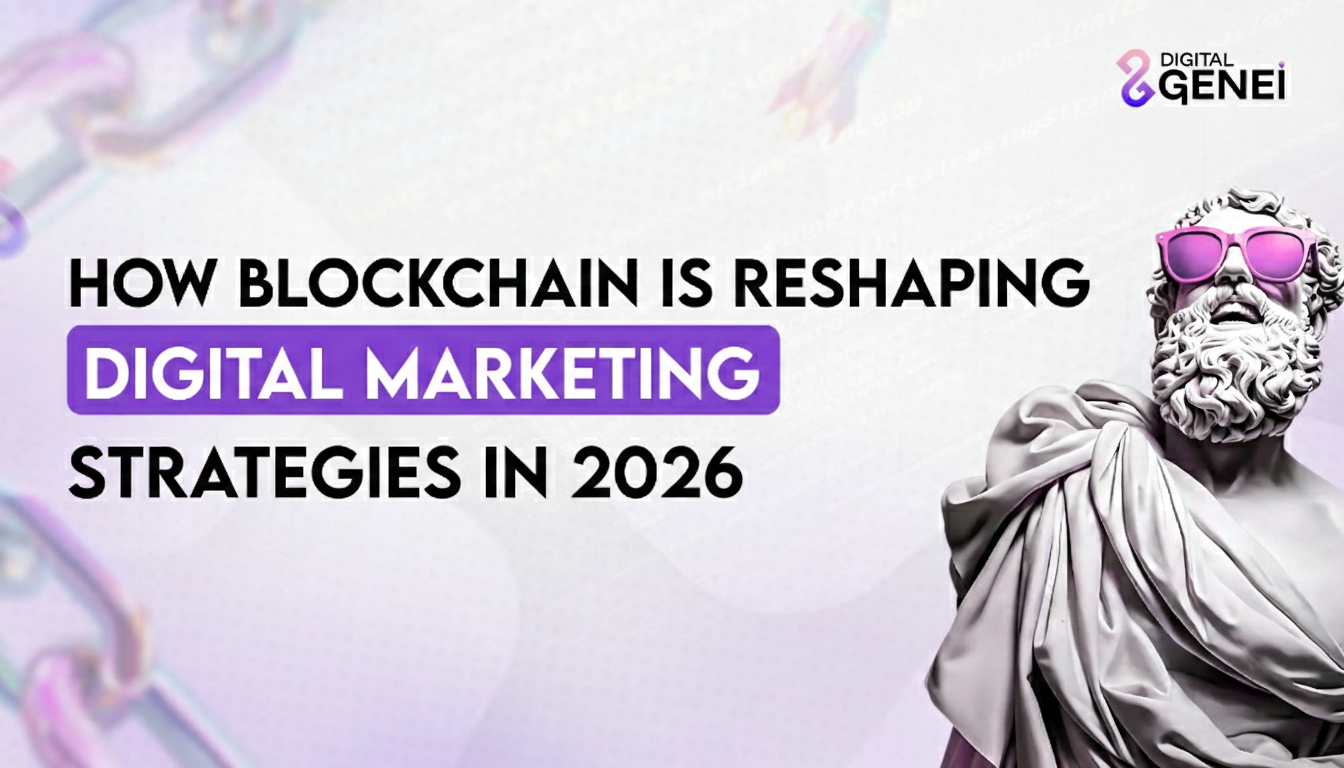
As we move through 2026, blockchain has shifted from a speculative curiosity to a foundational “invisible infrastructure” for digital marketing. By providing a “shared truth” through decentralized ledgers, it is solving long-standing issues of trust, transparency, and data ownership. For businesses looking to stay ahead, here is how blockchain is fundamentally reshaping marketing strategies this year. 1. Eliminating Ad Fraud with Transparency Digital advertising has historically lost billions to fake clicks and bot traffic. Blockchain provides a robust solution by recording every interaction—every view and click—on an immutable ledger. 2. The Era of Zero-Party Data and Privacy In 2026, privacy is a major competitive differentiator. Blockchain empowers users to reclaim ownership of their digital identities and personal data. 3. Programmable Loyalty: Beyond the Punch Card Traditional loyalty points are often trapped in silos, but blockchain makes rewards portable and tradable. 4. Smart Contracts for Automated Marketing Marketing operations are becoming leaner through the use of self-executing smart contracts. The Digital Genei Perspective Whether it’s boosting restaurant orders by 60% or building high-converting UK e-commerce stores, our success is built on adopting tools that increase trust. In 2026, blockchain is the ultimate tool for proving your brand’s accountability and protecting your customers’ privacy. Ready to explore how decentralized technology can protect your marketing budget?
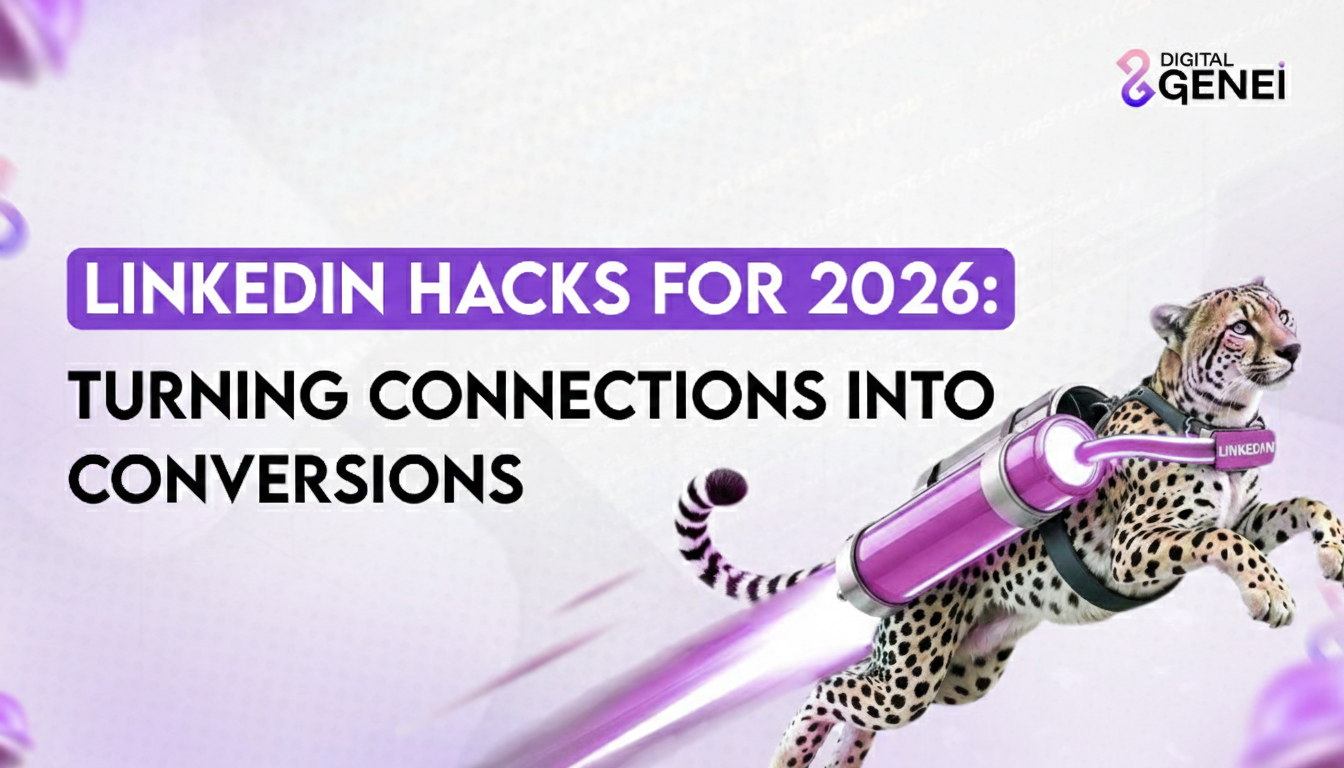
Turning LinkedIn Connections into Conversions: Your 2026 Strategy
While many see LinkedIn as just a digital resume, it has evolved into a powerhouse for social selling and lead generation. In 2026, the key is no longer just “connecting”—it’s about moving those connections through a strategic funnel that builds trust and drives business results. Here is how to transform your LinkedIn network into a predictable pipeline for your business. 1. Optimize Your Profile as a Landing Page Your profile is often the first “touchpoint” in your sales funnel. It should immediately tell a potential client how you can solve their specific problems. 2. Master the “Relationship-First” Outreach In 2026, generic, automated sales pitches are the fastest way to get ignored. Success lies in personalized, human-to-human interaction. 3. Content That “Sells” Without Selling Your content should establish you as a thought leader so that when you do reach out, the prospect already knows and trusts you. 4. Leverage AI and Automation (Wisely) Automation should be used to handle repetitive tasks, not to replace your personality. The Goal: Human Connection at Scale The most successful businesses on LinkedIn in 2026 treat every connection as a long-term partnership rather than a one-off transaction. By being consistent, helpful, and highly personalized, you turn your “network” into your most valuable business asset.
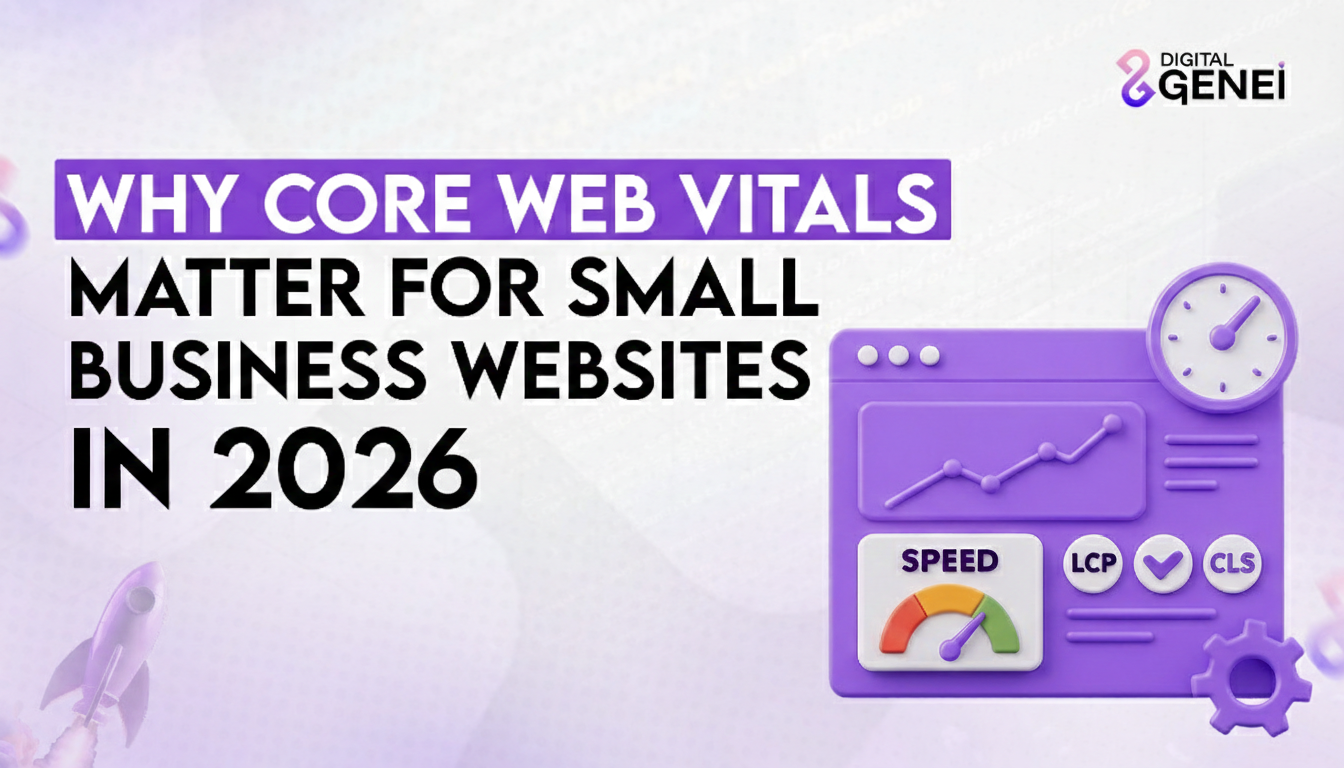
Core Web Vitals: The Small Business Checklist for 2026
In 2026, a fast website is no longer a luxury—it’s a baseline requirement for survival. Google’s Core Web Vitals (CWV) are the official metrics used to measure how real users experience your site’s speed, responsiveness, and visual stability. For small businesses, mastering these metrics can be the “tiebreaker” that pushes you ahead of competitors in local search results and AI-powered summaries. The 3 Pillars of Page Experience To pass the Core Web Vitals assessment in 2026, your site must meet specific “Good” thresholds for 75% of its page loads: Why Small Businesses Can’t Ignore These Your 2026 Optimization Checklist 🚀 Improve Loading (LCP) ⚡ Boost Responsiveness (INP) 📐 Fix Layout Shifts (CLS) How to Check Your Scores You don’t need a developer to see where you stand. Use these free tools: Final Thought: In 2026, your website isn’t just a brochure; it’s an experience. By respecting your user’s time and attention through Core Web Vitals, you build the trust necessary to turn a visitor into a loyal customer.
Beyond the Hype: Is Web 3.0 the Future of Your Digital Business?
The internet is entering a new phase known as Web 3.0, a decentralized evolution that emphasizes user ownership and transparency. For businesses, this marks a shift away from the centralized control of tech giants toward a fairer, more secure digital ecosystem. As we move through 2026, understanding the core principles of Web 3.0 is essential for staying competitive in a rapidly modernizing market. 1. What Exactly is Web 3.0? While Web 2.0 focused on “reading and writing” content, Web 3.0 adds “owning” to the equation. It uses several key technologies to redefine how we interact online: 2. Boosting Security and Building Trust One of the most immediate benefits of Web 3.0 is its enhanced approach to data security. 3. Reshaping Digital Marketing and Sales The marketing landscape is transforming as “interruptive” advertising loses its edge to more immersive experiences. 4. Strategic Advantages for Small Businesses For SMEs, Web 3.0 levels the playing field by reducing operational barriers. Preparing for the Shift The transition to Web 3.0 requires a complete rethinking of strategy—moving away from speculation and toward real utility. Whether it’s adopting cryptocurrency payments to increase average order values or exploring decentralized social networks, the time to experiment is now.
Why WordPress Still Dominates Web Development in 2026
Despite the constant influx of new “flashy” website builders, WordPress remains the undisputed king of the web. As we navigate 2026, it continues to power a massive portion of the internet—from small business blogs to complex enterprise solutions. At Digital Genei, we’ve used various platforms to achieve results like boosting restaurant orders by 60% and launching high-converting UK e-commerce stores, yet we frequently return to WordPress. Here is why WordPress is still the best choice for your business this year. 1. Unmatched Flexibility and Scalability WordPress isn’t just for blogging anymore. Its open-source nature allows developers to build virtually anything. 2. The Power of “Owned” Media Unlike “drag-and-drop” builders where you essentially rent your space, a self-hosted WordPress site gives you 100% ownership. 3. SEO-Friendliness by Design As highlighted in our Beginner’s Guide to SEO, search visibility is vital. WordPress is built with high-quality code that search engines love. 4. A Future-Proof Ecosystem The sheer size of the WordPress community ensures it stays modern. Is WordPress Right for You? Whether we are conducting a branding case study or building a retail store, we prioritize the tool that offers the best long-term ROI for our clients. In 2026, WordPress remains that tool for the vast majority of businesses. Thinking about a new website or a redesign?
The Power of Branding: A Deep Dive Case Study from Our Portfolio
At Digital Genei, we believe that a brand is more than just a logo—it is the emotional and visual bridge between your business and your customer. While we have helped clients achieve massive technical wins, such as boosting a restaurant’s online orders by 60% or building high-converting e-commerce stores for UK brands, those successes are always rooted in strong, cohesive branding. This case study explores how we transform businesses by harnessing the power of a professional identity. Phase 1: Identity Discovery Before we design a single pixel, we dive deep into the brand’s core. For our featured portfolio project, we focused on: Phase 2: Visual Storytelling Branding is about creating a “gut feeling.” We developed a visual language that communicates trust and authority instantly. Phase 3: Measuring the Impact Branding isn’t just about aesthetics; it’s about results. By aligning this client’s visual identity with their business goals, we saw: Why Branding Matters for Growth Whether you are a local restaurant looking to increase orders or a UK retailer launching a new e-commerce store, your branding is the foundation. It tells the world who you are before they ever read a single word of your copy. “A great brand makes a promise. A great business delivers on it.” — The Digital Genei Philosophy.
Building for Success: How We Built a High-Converting E-Commerce Store for a UK Brand
In the world of online retail, your website is your most important salesperson. A store that looks good but doesn’t convert is just an expensive digital business card. At Digital Genei, we specialize in turning browsers into buyers. We recently helped a UK-based brand overhaul their digital presence, focusing on user experience and conversion rate optimization (CRO). Here is the blueprint we used to build their high-converting e-commerce store. 1. Speed is the Currency of E-Commerce In the UK market, consumers expect instant gratification. If a page takes more than a few seconds to load, they are likely to head to a competitor. 2. Mobile-First Design The majority of e-commerce shopping now happens on smartphones. We didn’t just make the site “responsive”; we designed it for the thumb. 3. Trust Signals and Local Familiarity To convert UK customers, you must establish trust quickly. 4. Search Engine Dominance What good is a high-converting store if no one sees it? We implemented a rigorous SEO strategy targeting high-intent keywords specific to the UK market to ensure organic traffic stayed consistent. The Result: A Scalable Sales Machine By focusing on the user journey from the first click to the final “Thank You” page, this UK brand saw a significant lift in their conversion rate and average order value. Success Highlight: Digital Genei has a proven track record of driving results, such as helping a restaurant boost online orders by 60% through similar strategic digital optimizations. Is Your Store Reaching Its Full Potential? If your current website isn’t delivering the sales you expect, it might be time for a professional audit.
From Clicks to Kitchen: How We Boosted One Restaurant’s Online Orders by 60%
In the competitive world of the food industry, a great menu is only half the battle. If your customers can’t find you online—or if your ordering process is clunky—you’re leaving revenue on the table. We recently partnered with a local restaurant to revamp their digital strategy, and the results were transformative: a 60% increase in online orders in just a few months. Here’s a look behind the scenes at how Digital Genei made it happen. The Challenge: Visibility and Friction The restaurant had a loyal local following, but their online presence was lagging. They faced three main hurdles: The Digital Genei Strategy To achieve a 60% boost, we implemented a three-pillar approach: 1. Local SEO Domination We optimized their Google Business Profile and focused on “near me” keywords. By ensuring their location, hours, and menu were easily discoverable on Google Maps, we drove a massive increase in organic traffic from local diners. 2. Frictionless Mobile Experience We designed a “mobile-first” ordering landing page. By reducing the number of clicks between “I’m hungry” and “Order placed,” we significantly decreased cart abandonment rates. 3. Targeted Social Media Ads Using mouth-watering visuals and geo-fenced advertising, we targeted hungry customers within a 5-mile radius during peak lunch and dinner hours. These ads didn’t just build brand awareness; they drove direct sales. The Result: A 60% Surge By streamlining the digital journey, the restaurant didn’t just see more traffic—they saw more conversions. What’s Your Growth Goal? Whether you run a cafe, a fine-dining establishment, or a boutique retail shop, the principles of digital growth remain the same: Be found, be fast, and be helpful. Ready to see these kinds of results for your business?
Beginner’s Guide to SEO: What Every Small Business Owner Should Know
In today’s digital-first world, your website is often the first point of contact between your business and a potential customer. But having a beautiful website isn’t enough—people have to be able to find it. That’s where Search Engine Optimization (SEO) comes in. For many small business owners, SEO feels like a complex, ever-changing puzzle. However, at its core, SEO is simply about making it easy for search engines like Google to understand your value and connect you with the right audience. Here is a foundational guide to help you start climbing the search rankings. 1. Keywords: Speaking Your Customer’s Language Keywords are the words and phrases that people type into search bars. To win at SEO, you need to know which terms your customers are using. 2. On-Page SEO: Setting the Stage On-page SEO refers to the elements on your website that you can control. Each page should be optimized for a specific keyword. 3. Local SEO: Winning Your Neighborhood For small businesses with a physical location or service area, Local SEO is your secret weapon. 4. Technical SEO: The “Under the Hood” Stuff You don’t need to be a coder, but you do need to ensure your site provides a good user experience. 5. Backlinks: Building Your Reputation Think of a backlink (a link from another website to yours) as a “vote of confidence.” The more reputable sites that link to you, the more Google views you as an authority. Pro Tip: Start small. Get listed in local business directories or write a guest post for a local community blog to earn your first few high-quality links. Final Thoughts SEO isn’t a one-time task; it’s a marathon, not a sprint. You won’t see results overnight, but by consistently providing value and following these basics, you will build a digital presence that grows your business while you sleep.
The Intelligence Web: Navigating the Synergy of AI and Decentralized Networks in 2026.
In 2026, the intersection of Artificial Intelligence (AI) and Web 3.0 has moved beyond hype to become the bedrock of business survival. In an era where global supply chains can shift overnight and digital trust is a company’s most valuable asset, these tools are no longer optional—they are the “digital immune system” for the modern enterprise. Here is a look at how these technologies are reshaping resilience in 2026. 1. The Rise of “Agentic AI”: From Assistance to Action The biggest shift this year is the transition from passive chatbots to Agentic AI. Unlike the tools of 2024, today’s AI agents don’t just answer questions; they execute complex workflows. 2. Web 3.0: Building the “Shared Infrastructure of Trust” Web 3.0, powered by blockchain and decentralized ledgers, provides the transparency that AI lacks. In 2026, businesses use Web 3.0 to solve the “trust deficit.” 3. Real-Time Crisis Intelligence The synergy between AI’s predictive power and Web 3.0’s data integrity has created a new standard for Business Continuity Planning (BCP). The 2026 Resilience Checklist To stay ahead, business leaders are focusing on three core pillars: | Pillar | Actionable Step | | :— | :— | | Data Integrity | Transition to decentralized data storage to prevent single points of failure. | | AI Literacy | Upskill workforces to become “agent orchestrators” rather than just end-users. | | Hybrid Infrastructure | Combine on-premise security with cloud-based AI to ensure 24/7 reliability. | “In 2026, resilience isn’t just about bouncing back—it’s about having the digital foresight to never break in the first place.”