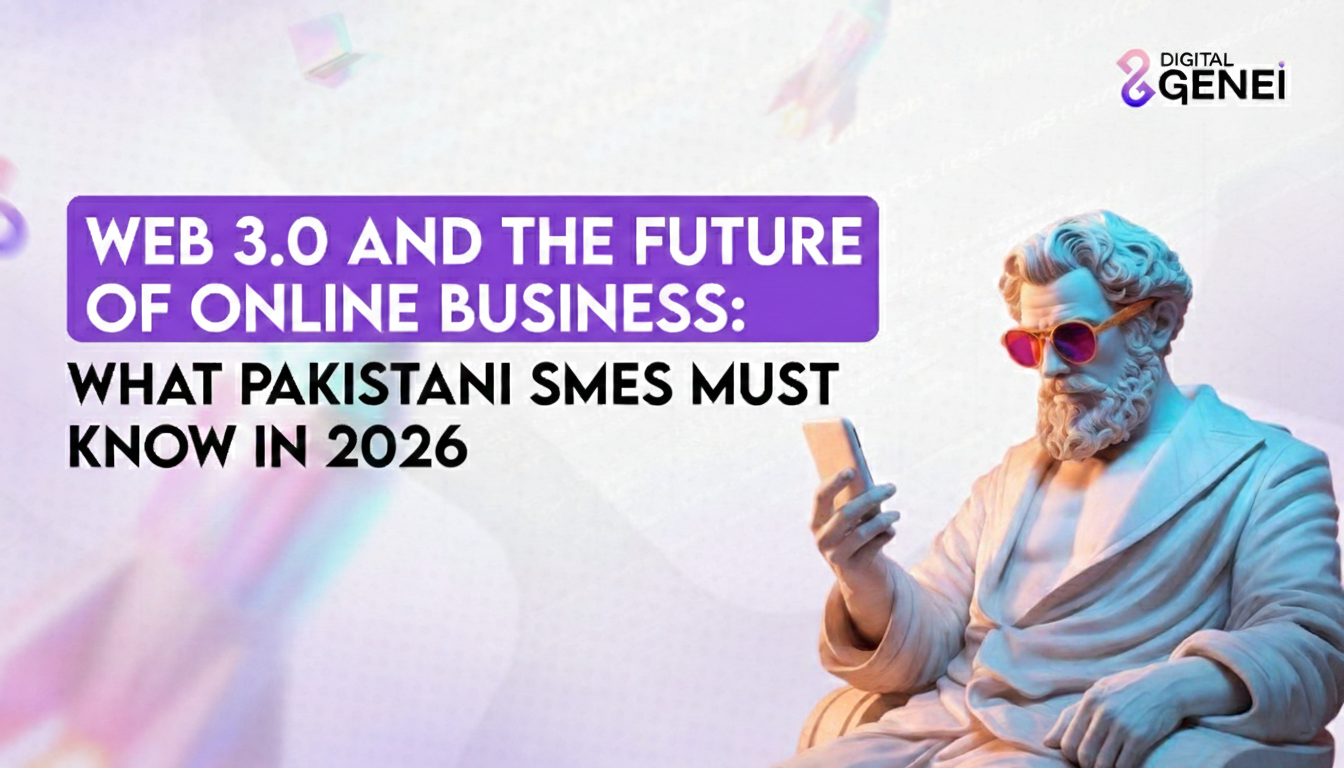
The internet as we know it is evolving, and it’s not just a minor update – it’s a fundamental shift. We’re moving from Web 2.0, characterized by centralized platforms and user-generated content, into the exciting, decentralized, and intelligent world of Web 3.0. For Pakistani Small and Medium-sized Enterprises (SMEs), understanding and adapting to this transition isn’t just an option; it’s a necessity for future success. In 2026, the foundational elements of Web 3.0 will be more integrated into daily online interactions than ever before. This presents both challenges and unparalleled opportunities. What is Web 3.0 and Why Does it Matter? At its core, Web 3.0 is about decentralization, openness, and greater user control. It leverages technologies like blockchain, artificial intelligence (AI), and machine learning to create a more intelligent, interconnected, and permissionless internet. Here’s a quick breakdown of the key differences: Feature Web 1.0 (Read-Only) Web 2.0 (Read-Write) Web 3.0 (Read-Write-Own) Era 1990s – Early 2000s Early 2000s – Present Present – Future Core Concept Static websites, information portals Social media, user-generated content, centralized platforms Decentralized, AI-driven, semantic web, blockchain User Role Consumer Contributor Owner, participant Data Control Server-controlled Platform-controlled User-controlled Key Tech HTML, HTTP JavaScript, CSS, APIs Blockchain, AI, NFTs, DAOs Monetization Advertising, subscriptions Advertising, data selling Tokenomics, creator economy The Pillars of Web 3.0 for Pakistani SMEs For Pakistani businesses, several aspects of Web 3.0 will be particularly impactful by 2026: 1. Blockchain and Decentralization This is the backbone of Web 3.0. For SMEs, blockchain can bring: 2. NFTs and Digital Ownership Non-Fungible Tokens (NFTs) are unique digital assets. 3. AI and Semantic Web Web 3.0 will understand data contextually, leading to: 4. The Metaverse and Immersive Experiences While still nascent, the metaverse – a persistent, interconnected virtual world – will offer new frontiers: Opportunities for Pakistani SMEs in 2026 Challenges to Consider Getting Ready: A Roadmap for Pakistani SMEs By 2026, waiting won’t be an option. Here’s how Pakistani SMEs can prepare:
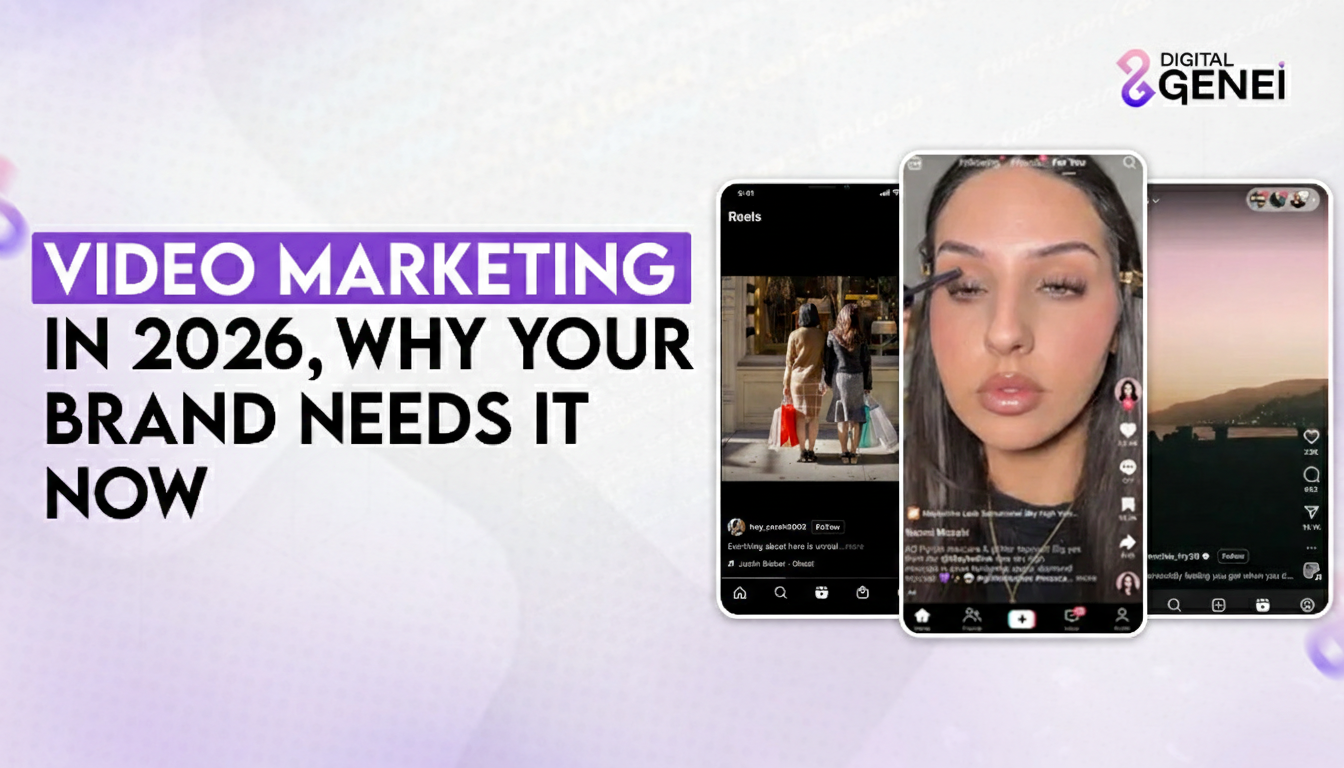
Why Video Marketing Is Important For Brands In 2026
In 2026, the digital world has moved beyond the “era of the image.” We are now firmly in the era of the video. With video content accounting for an estimated 82% of all internet traffic, any brand not prioritizing a video strategy is effectively invisible to the majority of the web. The Ultimate Engagement Tool Video doesn’t just present information; it creates an experience. In a landscape where the average attention span is measured in seconds, video is the only format capable of holding interest up to 5 times longer than static images. Why Your Brand Cannot Ignore Video in 2026 1. Superior Retention and Emotional Connection Science shows that viewers retain 95% of a message when they watch it in a video, compared to just 10% when reading text. This “visual storytelling” allows brands to build trust and authenticity by putting a human face to their business, making them far more relatable to modern consumers. 2. The Dominance of Short-Form Vertical Content Platforms like TikTok, Instagram Reels, and YouTube Shorts have redefined how we consume media. Short-form vertical videos (under 60 seconds) are now the primary driver of brand discovery. 3. SEO and Discoverability Search engines like Google now prioritize video indexing more than ever. 4. Direct Impact on Sales (ROI) Video is a conversion powerhouse. Approximately 82% of consumers report being convinced to purchase a product or service specifically after watching a branded video. 5. AI-Driven Scalability Creating high-quality video used to require a massive production team. In 2026, AI tools allow brands to script, edit, and even generate high-fidelity video content in a fraction of the time, making it accessible for even the smallest marketing budgets. Conclusion: Adapt or Fade Away Video is no longer just an “option” in your marketing toolkit—it is the foundation. Whether it’s a 15-second “behind-the-scenes” clip or a detailed product tutorial, video is the most effective way to meet your audience where they already are.
Top AI-Powered Marketing Tips & Tricks for Small Businesses
For small businesses in 2026, Artificial Intelligence is no longer a luxury reserved for tech giants—it is the ultimate equalizer. By leveraging AI, small teams can now execute high-level marketing strategies that previously required massive budgets and dozens of staff members. The AI Advantage: Doing More with Less The goal of AI in small business marketing isn’t to replace the human touch, but to amplify it. It’s about automating the repetitive so you can focus on the creative. Strategic AI Tips to Transform Your Marketing 1. Hyper-Localized Content Creation Small businesses thrive on local community. Use AI tools to adapt your core messaging into localized dialects or to reference specific neighborhood trends and events automatically. 2. Predictive Customer Insights Don’t just react to your customers; anticipate them. AI can analyze your existing sales data to predict when a customer is likely to need a refill, a service, or a seasonal upgrade. 3. Professional-Grade Visuals on a Budget With the tools available in 2026, you don’t need a professional studio to create stunning marketing assets. 4. 24/7 Intelligent Customer Engagement Small business owners can’t be awake 24/7, but AI can be. Modern AI chatbots can handle complex customer inquiries, book appointments, and even process basic returns through your website or social media DMs. 5. Smart Ad Spend Optimization Stop “spraying and praying” with your ad budget. AI algorithms can now manage small-scale ad campaigns, automatically shifting your budget to the platforms and times of day where you see the most engagement. Getting Started: Small Steps, Big Impact You don’t need to overhaul your entire business overnight. Pick one area—whether it’s social media content or customer service—and integrate one AI tool. Once you see the time savings, you’ll wonder how you ever managed without it.
Essential Website Optimization Tips for 2026
In the digital landscape of 2026, a website is no longer just a digital brochure; it is a high-performance engine that must balance blistering speed with deeply personalized user experiences. With AI-driven search engines and evolving user expectations, staying ahead requires more than just “best practices”—it requires a forward-thinking strategy. Why Optimization Matters Now More Than Ever The window to capture a user’s attention has shrunk to less than a second. If your site doesn’t load instantly or feel intuitive, users won’t just leave; they’ll likely never return. Optimization in 2026 is about blending technical precision with human-centric design. Top 5 Website Optimization Strategies for 2026 1. Core Web Vitals: The Deep Dive Google and other major search engines have moved beyond basic speed metrics. Optimization now focuses on Interactivity and Visual Stability. 2. AI-Powered Personalization Static websites are a thing of the past. In 2026, optimization means using lightweight AI models to serve dynamic content based on user behavior in real-time. 3. Voice and Visual Search Readiness With more users searching via smart glasses and voice assistants, your metadata must be conversational. 4. “Mobile-First” is Now “Mobile-Only” While desktop traffic still exists, the vast majority of web interaction happens on the move. 5. Security & Privacy Fortification Users in 2026 are highly protective of their data. A slow, clunky cookie consent banner can kill your conversion rate. The Bottom Line Optimization is a continuous journey, not a one-time task. By focusing on speed, personalization, and accessibility, you ensure your brand remains relevant in an increasingly crowded digital world.
The Future of Digital Marketing in Pakistan: Web3, AI, and Beyond (2026)
As we step into 2026, the digital landscape in Pakistan has officially crossed the threshold into a new era. No longer just a follower of global trends, Pakistan’s tech scene—led by innovation hubs in Karachi, Lahore, and Islamabad—is now a competitive player in the Web3 and AI space. From the rollout of 5G to the formalization of virtual asset regulations, the rules of engagement for businesses have fundamentally changed. Here is how you can navigate the marketing frontier this year. 1. The AI-First Marketer: From Copy to Prototyping In 2026, AI is the backbone of every high-performing marketing department. We’ve moved past simple text generation; today’s AI-powered growth marketing focuses on: 2. Web3: The Regulated Frontier 2026 marks the year Web3 became “official” in Pakistan. With the establishment of the Pakistan Virtual Assets Regulatory Authority (PVARA), businesses are finally moving from the grey market to legal, scalable blockchain solutions: 3. The 5G “Phygital” Explosion With 5G becoming mainstream in urban centers, the “Phygital” (Physical + Digital) experience is the new gold standard for retail. 4. Why 2026 is the Year of Trust As AI becomes more prevalent, Human-First Media has become a luxury. In a world of deepfakes and automated bots, Pakistani consumers are gravitating toward brands that prioritize: Final Thoughts The 2026 digital marketing landscape in Pakistan rewards the bold and the tech-savvy. Whether you are leveraging Web3 for community building or AI for operational efficiency, the goal remains: use technology to enhance human connection, not replace it.
How AI Can Transform Your Daily Tasks
Artificial intelligence has moved far beyond science fiction and into our everyday lives. Whether you realize it or not, AI is already helping millions of people work smarter, save time, and accomplish more each day. Let’s explore the practical ways you can harness AI to make your daily routine more efficient and productive. Morning Productivity Boost Start your day by letting AI handle the mental load of planning. Instead of staring at a blank page wondering where to begin, AI assistants can help you organize your thoughts, draft emails, and prioritize your to-do list. Simply describe what you need to accomplish, and AI can help you create a structured plan that makes sense for your schedule. Many people use AI to summarize long emails or documents they receive overnight, getting straight to the key points without spending precious morning minutes reading through everything in detail. This alone can save you 30 minutes or more each day. Writing and Communication One of the most valuable uses of AI is in writing tasks. Whether you’re crafting professional emails, creating social media posts, drafting reports, or even writing creative content, AI can serve as your writing partner. It can help you: The key is to use AI as a collaborator, not a replacement. You provide the expertise and personal touch, while AI handles the heavy lifting of structure and refinement. Learning and Research AI excels at breaking down complex topics into understandable explanations. Whether you’re learning a new skill, researching a purchase decision, or trying to understand a technical concept, AI can provide clear explanations tailored to your level of understanding. Students and lifelong learners use AI to create study guides, explain difficult concepts in simpler terms, and even practice new languages through conversation. It’s like having a patient tutor available 24/7. Creative Projects From brainstorming business names to developing marketing strategies, AI can accelerate your creative process. It’s particularly helpful when you need multiple options or perspectives. Rather than getting stuck on a single idea, you can explore dozens of possibilities in minutes. Designers and content creators use AI to generate initial concepts, create color palettes, suggest layouts, or even write first drafts of scripts and presentations. This frees up mental energy for the refinement and personal touches that make work truly shine. Data Analysis and Decision Making AI can help you make sense of information overload. Whether you’re comparing products, analyzing trends, or trying to make an informed decision, AI can process large amounts of data and present insights in digestible formats. Business professionals use AI to analyze spreadsheets, identify patterns in data, create visualizations, and generate reports that would otherwise take hours of manual work. Coding and Technical Tasks Even if you’re not a professional developer, AI can help you with technical tasks. Need a simple script to automate something? Want to understand how to use a software feature? AI can write code snippets, explain technical documentation, and help troubleshoot issues. Developers use AI to debug code, learn new programming languages faster, and even build entire applications with guidance and generated code that they then customize. Personal Organization AI can help you plan meals, organize events, create packing lists, draft workout routines, or manage household projects. The mundane organizational tasks that drain your energy can be streamlined with AI assistance, leaving you more time for what matters. The Bottom Line The real power of AI in daily life isn’t about replacing human creativity or judgment. It’s about eliminating friction, speeding up routine tasks, and giving you more mental space for the work that requires your unique human insight and expertise. The best approach is to start small. Pick one repetitive or time-consuming task in your daily routine and see how AI might help. As you get comfortable, you’ll discover more opportunities to work smarter rather than harder. The future of productivity isn’t about working more hours—it’s about leveraging tools like AI to make every hour count. Why not start today?
The Future of Digital Marketing in Pakistan: Web3, AI, and Beyond
By the end of 2025, digital marketing in Pakistan looks completely different from just a few years ago. The rise of Web3, artificial intelligence, and blockchain-driven platforms has changed how businesses reach their audiences. At Digital Genei, we’ve seen firsthand how agencies, freelancers, and startups are adjusting to this fast-moving landscape. One of the biggest shifts came with LinkedIn’s late 2025 update, which prioritised video-driven content and professional newsletters. Pakistani professionals who share authentic insights through short-form clips and niche-focused articles are finding stronger engagement. This human touch beats purely promotional campaigns. Web3 has also entered the mainstream. Brands are now experimenting with blockchain-based loyalty programs, where customers earn tokens that can be redeemed across multiple platforms. Startups in Karachi and Lahore are already adopting these systems to reward repeat clients, making marketing more transparent and interactive. Artificial intelligence tools, once feared, are now being used more responsibly. Agencies use them to analyse customer behaviour, but real content creation still needs a human voice. Businesses that combine AI insights with localised storytelling—something uniquely Pakistani—are the ones standing out in competitive markets. Another trend is the rise of augmented reality (AR) in campaigns. Retailers are allowing customers to virtually test products on their phones before purchase. This interactive marketing style resonates with Gen Z and millennial buyers who demand experiences, not just advertisements. At Digital Genei, our approach is clear: Pakistan’s digital future is hybrid. AI and Web3 provide the tools, but it is human creativity and local relevance that drive results. As 2025 closes, businesses that adapt quickly to these shifts will not just survive—they’ll thrive in a more connected, transparent, and customer-focused digital economy. Popular 2025 SEO Keywords for Indexing:Digital Genei digital marketing Pakistan 2025, Web3 marketing Pakistan, AI marketing tools Pakistan, LinkedIn updates 2025 Pakistan, blockchain loyalty programs Pakistan, AR marketing Pakistan startups, generative content Pakistan 2025, hybrid marketing strategies Pakistan, digital economy Pakistan Web3, Digital Genei future of marketing
Top IT Skills Every Professional Should Master in 2025
As we approach the end of 2025, the IT industry continues to transform faster than most professionals can keep up. For those working in Pakistan’s tech sector or aiming to compete globally, mastering the right skills is no longer optional—it is the foundation of career growth. At Digital Genei, we see firsthand how choosing the right skillset can position IT professionals for success in both local and international markets. One of the most in-demand skills in 2025 is cloud computing. With companies moving their infrastructure to services such as AWS, Azure, and Google Cloud, professionals with expertise in managing and securing cloud systems are among the highest paid in the IT industry. Cybersecurity remains another top priority. With the rise of ransomware and data breaches, businesses are desperate for experts who can protect systems and implement proactive defense strategies. Certifications in ethical hacking, penetration testing, and risk management are now career game-changers. Artificial intelligence and machine learning continue to reshape industries. Beyond AI development, professionals skilled in data science, natural language processing, and AI integration into business operations are leading the way. Companies in Pakistan, from startups to banks, are already recruiting talent in these areas. Blockchain is no longer just about cryptocurrency. In 2025, it plays a major role in supply chain management, healthcare, and even government services. Professionals who understand smart contracts and decentralized applications (dApps) are highly valued globally. Finally, soft skills such as problem-solving, adaptability, and communication are just as important as technical expertise. Employers now demand professionals who can collaborate across teams and explain complex tech solutions in simple terms. At Digital Genei, we advise IT professionals to focus on a hybrid of technical mastery and people skills. In 2025, the winners in the IT job market will be those who combine deep technical knowledge with the ability to adapt quickly to new challenges. Popular 2025 SEO Keywords for Indexing:Digital Genei IT skills Pakistan 2025, top IT skills 2025 Pakistan, cloud computing skills Pakistan 2025, cybersecurity careers Pakistan 2025, AI and machine learning jobs Pakistan, blockchain IT skills 2025, data science professionals Pakistan, IT soft skills 2025, best IT certifications Pakistan 2025, Digital Genei IT career growth
The Power of a Great Website: How a Top-Notch Design Can Skyrocket Your Business
In today’s digital age, a company’s online presence is often the first point of contact for potential customers. A well-designed website is not just a digital storefront; it’s a powerful tool that can catapult your business to new heights. From creating a strong first impression to enhancing user experience, the impact of a top-notch website design on your business cannot be overstated. In this article, we will explore the transformative power of a great website design and how it can lead your business to unparalleled success. Creating a Lasting First Impression Your website is often your first impression of the world. – Andy Crestodina When visitors land on your website, they form an instant impression of your business. A professionally designed website with an intuitive layout, eye-catching visuals, and clear messaging can captivate visitors and make them want to explore further. On the other hand, a poorly designed website can turn potential customers away before they even have a chance to learn about your offerings. Building Trust and Credibility A well-crafted website reflects your commitment to professionalism and quality. It establishes credibility and builds trust with your audience. A design that is consistent with your brand identity and showcases customer testimonials, industry affiliations, and relevant certifications can reassure visitors that your business is reliable and trustworthy. Enhancing User Experience User experience is everything. It always has been, but it’s undervalued and underinvested in. If you haven’t done your research, to think and feel like your customers, then your website will be a hard sell. – Tron Jordheim User experience (UX) is a cornerstone of a great website design. A user-friendly interface, easy navigation, and intuitive layout contribute to a positive experience for visitors. A seamless browsing experience encourages visitors to stay longer, explore more, and ultimately convert into customers. Features like clear call-to-action buttons, well-organized content, and responsive design on various devices elevate the user experience and drive engagement. Boosting Search Engine Visibility Search engines value user experience and quality content. A website with a great design that focuses on user needs and provides valuable information can rank higher in search engine results. Search engine optimization (SEO) techniques, combined with a well-designed website, can increase organic traffic and attract more potential customers to your business. Differentiating Your Brand In a competitive marketplace, a unique and memorable website design can set your brand apart. A distinctive design helps your business stand out from the crowd and leaves a lasting impression on visitors. By showcasing your brand’s personality and values through design elements, color schemes, and visuals, you create a brand identity that resonates with your target audience. Driving Conversions and Sales Design is not just what it looks like and feels like. Design is how it works. – Steve Jobs Ultimately, the goal of a business website is to drive conversions and sales. A well-designed website guides visitors toward desired actions, whether it’s making a purchase, filling out a contact form, or signing up for a newsletter. Strategic placement of elements, persuasive copywriting, and an inviting design can lead to higher conversion rates and increased revenue. Conclusion: A Catalyst for Business Success The influence of a top-notch website design on your business’s success cannot be underestimated. It’s not just about aesthetics; it’s about creating an immersive and impactful online environment that resonates with your audience. From making a powerful first impression and building credibility to enhancing user experience and driving conversions, a great website design has the potential to skyrocket your business to new heights. In the digital landscape, your website is more than a virtual storefront – it’s a dynamic tool that can shape perceptions, drive engagement, and pave the way for unparalleled success. [Show less]